How to Choose the Right Security System for Your Farm

Protecting a farm can be hard because of its size and remote location, and intruders often take advantage of that.
You can’t always keep a constant eye on the place, but an effective security system gives you peace of mind without having to be there.
There are plenty of systems out there, so it’s worth thinking about what you want from yours: where the cameras go, whether they’re hidden or visible, and whether you need high-resolution images or a faster reaction time. These things will help you choose the right system for your farm.
Farms need durable outdoor cameras that can handle every kind of weather, and the insect swarms in summer. Most outdoor cameras come in a waterproof case to protect them from the elements.
Things to consider
Power
- AA batteries, best for farms you visit often or live on.
- Rechargeable battery packs for battery-powered cameras.
- Ultra-low power use, with a mix of battery and solar.
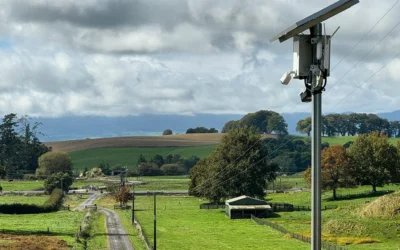
- Solar power, good for remote spots that don’t get many visits. Solar setups have built-in batteries, so cameras keep running after several days without sun.
Wi-Fi
Farms with Wi-Fi can use wireless cameras, which are easier to set up. Properties without Wi-Fi will need wired cameras. Dual-mode Wi-Fi or PoE (Power over Ethernet) allows 24/7 monitoring. With Wi-Fi, footage goes straight to your device, while wired cameras record to an SD card.
Motion sensors
Your cameras should have motion-activated sensors, so they capture footage every time they detect movement.
Trigger time
Trigger time is how fast the camera captures an image once it detects movement. The faster the trigger time, the more the camera catches. Some cameras also have a delay between triggers.
Night vision
Cameras with night vision give 24-hour monitoring. “Black flash” cameras use infrared LEDs to capture images in complete darkness, with no red light to give them away to intruders.
GPS
GPS tracking is handy if equipment is stolen. It can send you a location and let you know when your stolen property is on the move.
Accessing footage
You should be able to view footage easily on any device, whether you’re on the farm or somewhere else.
Position
Deciding where your cameras go will tell you how many you need. Covering the farm entrance, the fence line and any sheds will make sure the place is well monitored.
Sensor lights
Sensor lights keep important areas well lit, like around livestock and machinery.
Signage
Signs showing the property is under camera surveillance can deter intruders before they come in.
Final thoughts
An effective security system is part of good farm management. It gives you peace of mind that your land, livestock, equipment and people are protected and monitored around the clock. Just do your research before you buy.