What Type of Camera is Right for My Property?
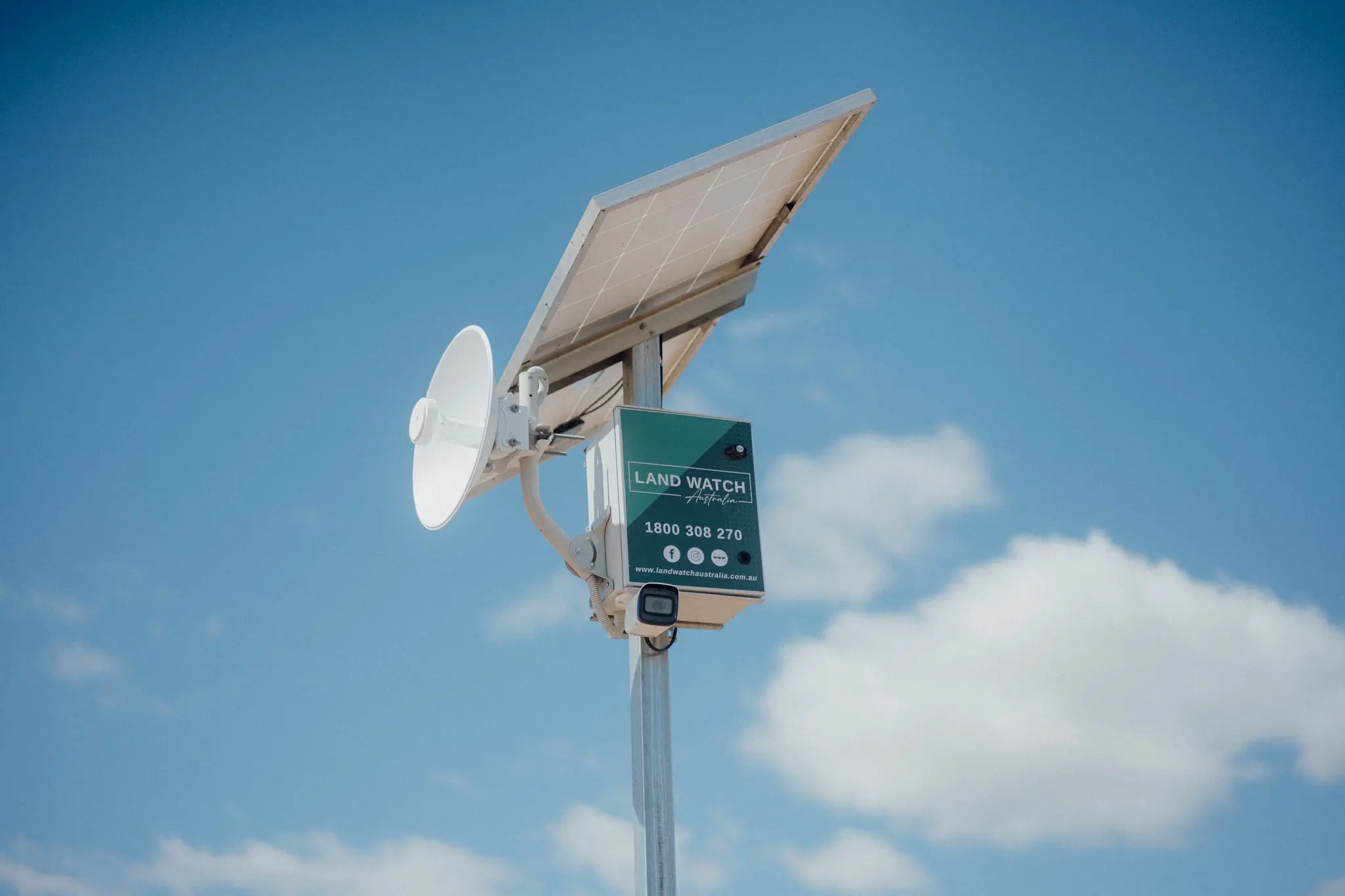
At Land Watch, we believe in solving problems for our clients for the long term. A quick fix often isn’t a permanent fix. Don’t get us wrong, we’re all for a bit of country ingenuity with whatever’s on hand when it’s needed.
Land Watch cameras aren’t that. Our solutions are tried and tested for the specific problem. When we quote and plan, our focus is choosing the right camera for each location: the right tool for the job. To do that, we ask three questions.
What are you keeping an eye on?
What you’re watching is the main factor in choosing a camera. For our clients, the four main areas are waters, entries, yards and sheds, and each suits a different type of camera.
Waters
Troughs, dams, tanks and bores are the lifeblood of your property, so it’s vital to check them as often as you can. Usually you don’t need to see them at night or record footage, which keeps equipment costs down. We do recommend night recording on your main water source, so you can check it any time and keep it secure. If you want to control the water while you’re watching it, like turning off a pump, that also plays a part in choosing the camera.
Entries
Knowing who’s coming and going, when and in what vehicle is one of the most common concerns we hear. Usually this is solved with a fixed camera on the grid or gate with built-in Smart Motion Detection (SMD), so you get an alert when a vehicle comes in and not when a pig runs past. Nobody likes the camera that cried wolf.
We can go one step further with an ANPR (Automatic Number-Plate Recognition) camera. Then you don’t just know someone has crossed the grid. You get a record of their number plate, and not just an album of photos but a list of every plate’s letters and numbers.
Yards
Watching the yards is usually about two things: security and animal welfare. When stock are locked in, you need to know how they’re going. Sometimes the yards are just down from the house, and sometimes they’re a couple of kilometres away or on another property altogether. We usually use a PTZ (pan, tilt and zoom) camera that can pan around the whole yard and zoom in on an animal when needed. If a weaner is down, you want to zoom in and check it’s having a nap and hasn’t been trampled.
For yards away from the house, security matters too. Here we use a camera with SMD again, so we can set trip lines that detect movement where there shouldn’t be any, and tell people from animals. And when the truck arrives for pick-up, a camera on the loading ramp gives you peace of mind that they loaded 100 head and not 99.
Sheds
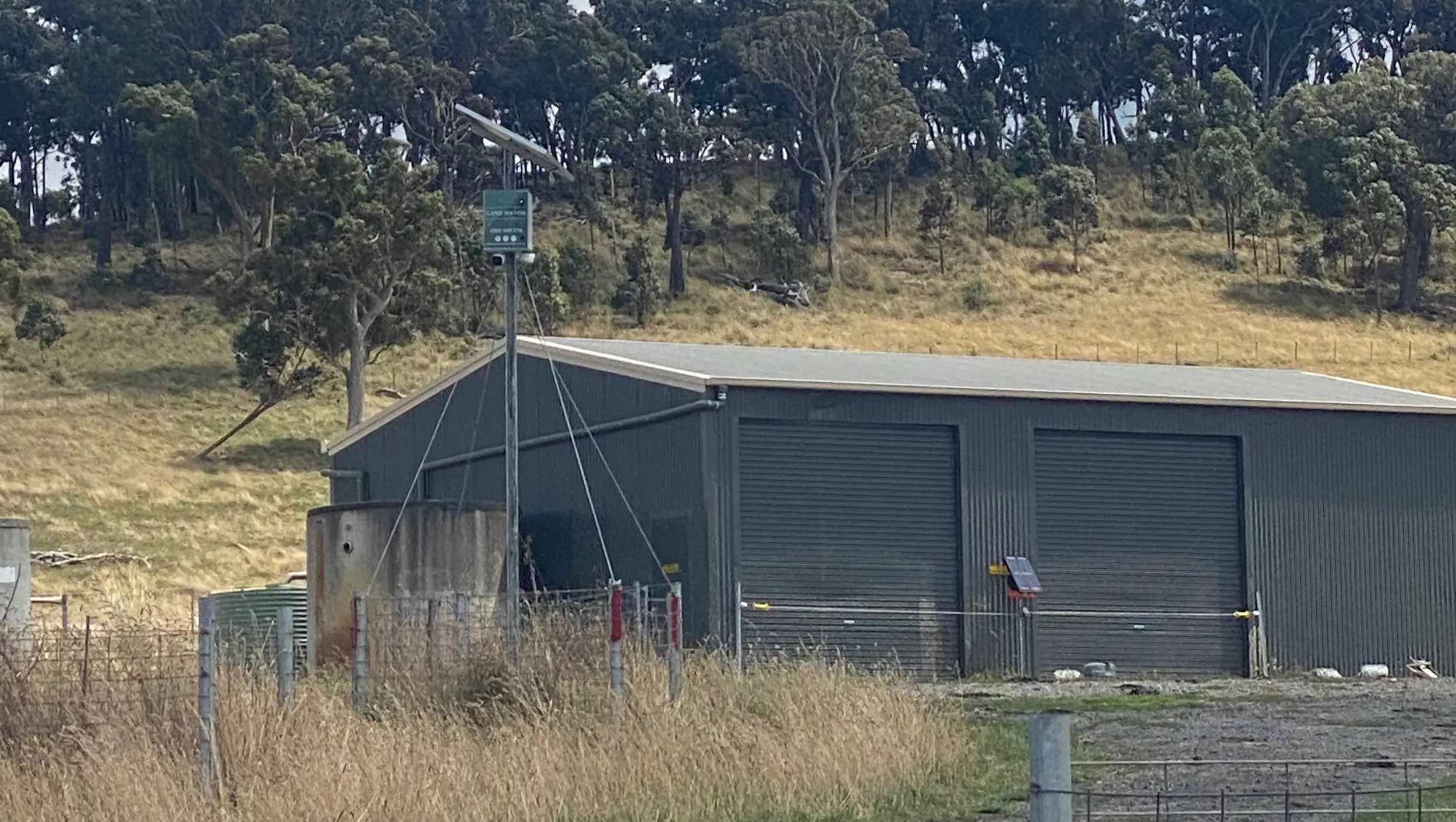
This is a broad term. On some properties it’s used very loosely for an iron-clad structure, or a timber machinery shed that seems held up more by termites holding hands than actual timber. Or it might be a shed the size of 100 townhouses, with a couple of machines inside worth more than the best Mercedes. Either way, the contents are worth watching, so we use cameras to suit. Inside, we want a wider angle that doesn’t need to see as far. Outside, cameras usually need to see further. Smart Motion Detection is used here too, but panning may not be needed.
How far away is it?
We split distance into three categories: under 30 m, 30 to 100 m, and over 100 m.
A tank level float at 20 m, or a front grid with the camera within 10 m, calls for our standard camera. It has enough image quality to see detail, without a built-in zoom.
A loading ramp 60 m away or a gate at 80 m suits an upgrade to a zoom camera, which is set to a zoomed-in view of the focus area during installation.
Anything over 100 m and we bring out the big guns. Like your favourite rifle scope, this camera zooms in on its target and stays clear. Troughs or tanks up to 400 m away are no problem, with cars and buildings visible well beyond. With that much zoom, the camera needs to change its angle, so we use a PTZ. Now you can see 400 m away and rotate a full 360°.
How often does it need to be seen?
A trough or tank might only be checked once a day, so there’s no need for that camera to record, or even be on, the rest of the time. At the other end of the scale is a main entry that needs recording 24/7, 365 days a year, day and night, through storms, power outages and the apocalypse. That’s where we use the best of the best, plus a couple of back-ups and fail-safes.
The main consideration is night vision. A camera might see 80 m during the day, but if night vision is a priority, we’ll recommend upgrading to a camera with stronger infrared night vision.
If you haven’t come across infrared night vision before, it’s the technology that lets a camera see in the dark. It works best when there are structures or objects in view, rather than an open paddock. Infrared boosting is also available if seeing further at night is important.